A seat cover looks simple until it arrives and doesn't sit right on the seat pan. After cutting and stitching these for tractors across Haryana for decades, the same three questions decide whether a cover fits well or ends up wrapped around the seat with elastic and hope. Here's what actually matters.
Tractor seats look similar from a distance, but the mounting brackets, backrest height and base width vary by manufacturer and often by model year. A cover cut for a Farmtrac 60 will sit loosely or pull tight in the wrong places on a Massey Ferguson 241, even though both look like a standard single-seat design. Always check the cover against your tractor's model name, not a generic "universal" listing — model-specific fitment is the difference between a cover that stays put through a full day's work and one that bunches up after a week.
Quilted PU leather covers are the most common choice because they resist cracking in heat and wipe clean easily — good for most of the year in North India. In regions with heavy monsoon exposure or long open-field hours, a slightly thicker foam-backed quilting adds comfort on long shifts without trapping heat the way a fully padded fabric cover can.
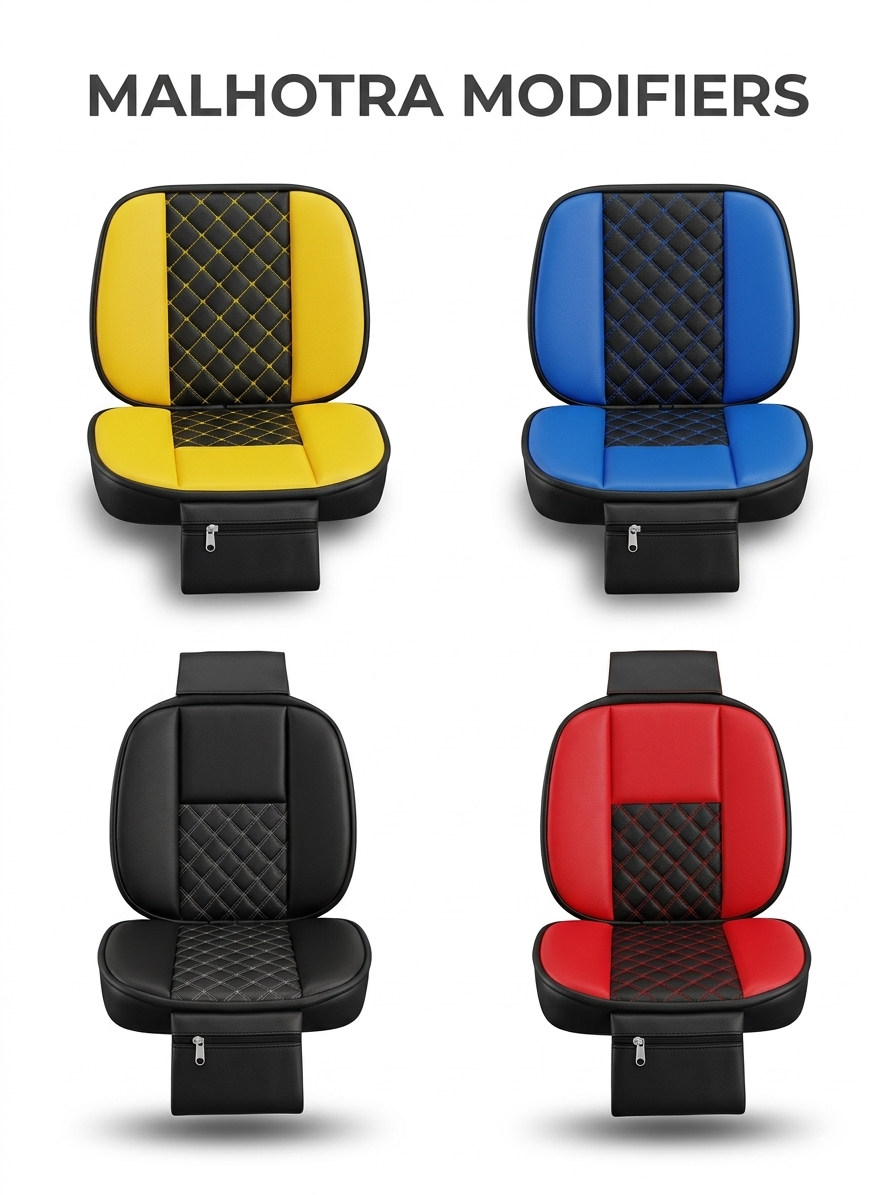
We cut and stitch these covers to order in four standard colourways:
If you're restoring a tractor to its original factory colour scheme, matching the seat cover to the body paint is a small detail that makes the finished machine look complete — it's one of the first things people notice in restoration photos.
Not sure which fitment your tractor needs?
Ask on WhatsApp →